(Photo: NCAA)
2. Your first repeat cross-country national champ in 14 years 🏃🏾♀️
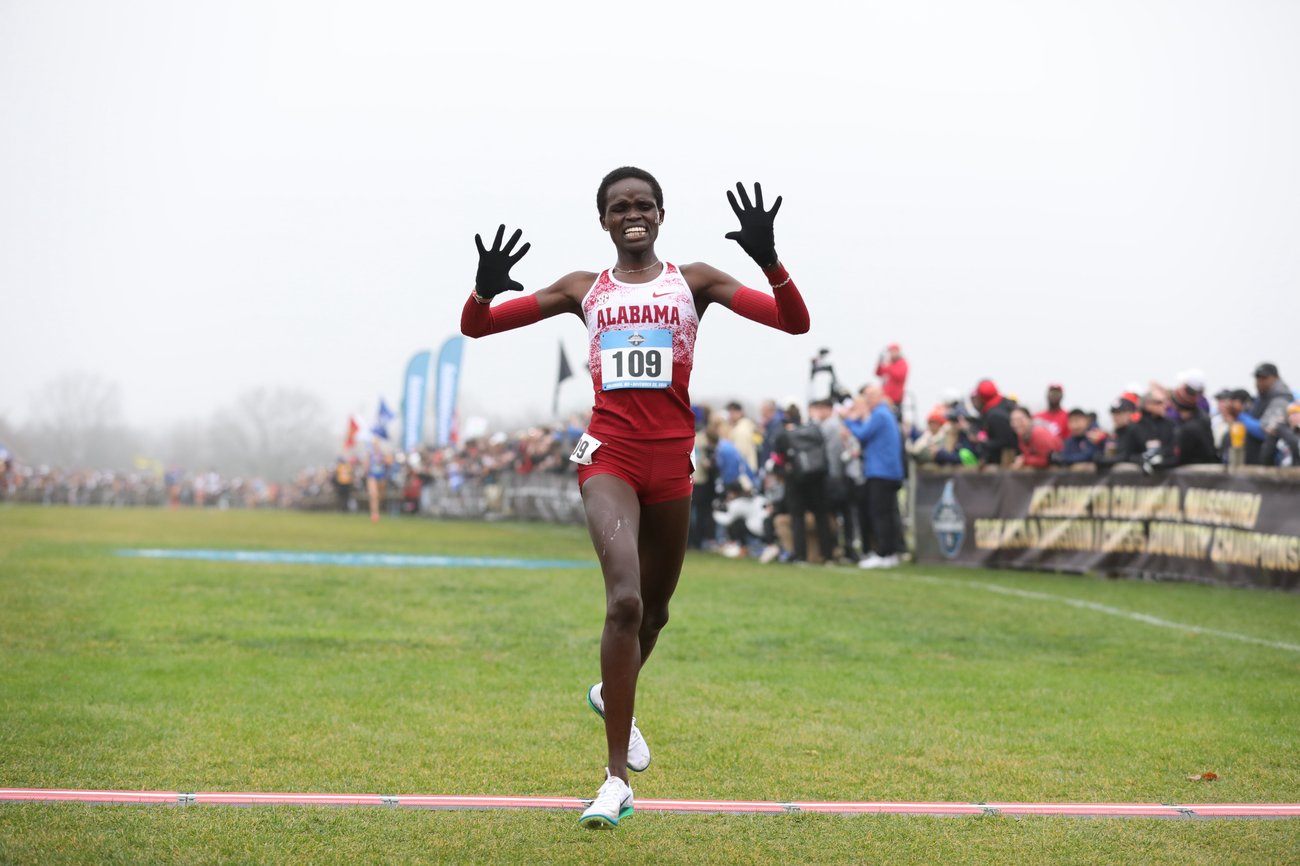
This past weekend, Alabama's Doris Lemngole defended her cross-country national title with a surge in the final half-mile ahead of BYU's freshman Jane Hendegren. It was a match-up that had been much hyped, given Hendegren's dominance in high school and throughout her first collegiate season — while Lemngole,
a junior, has had such a successful year that she competed in the World Championships and took 5th in the steeplechase in September (delaying the start to her cross-country season).
In the team race, NC State won its fourth national title in five years 👑 👑 👑 👑
How does cross-country work? In NCAA, the women run 6km and the men run 10km. Every team has seven runners; the top five count to a team's score; every runner's place is added up and lowest score wins. That's part of what makes it so exciting! Every place counts! Every runner counts!
FUN FACT: All of the top three women's teams are coached by women 💜
LESS FUN: There's been a growing concern about the recruitment of international and older athletes to college programs — and how far some recruitment agencies are now taking it (and at what cost to those athletes!) — but the debate reared up this past weekend between coaches
🎧 Confused? We dive into the issues and how the discussion about the role of NCAA sports can take a weird racist turn.
3. What responsibility do governing bodies have for eating disorders?
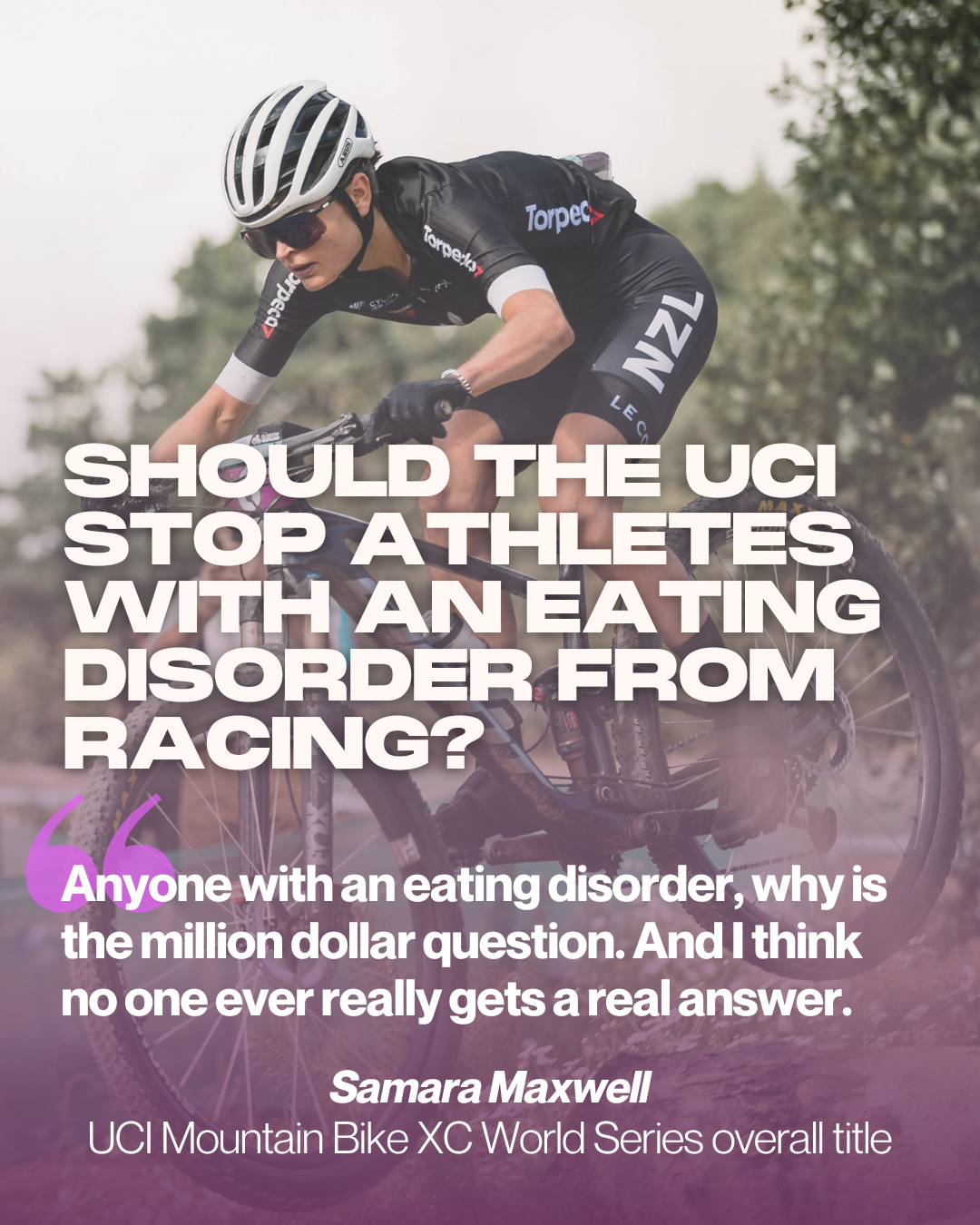
This week on the Feist podcast, world champion mountain biker Samara Maxwell joins us to talk about eating disorders and why she, personally, is happy that her federation forced her to stop riding her bike and to get help.
If you know Sammie's story, you likely know this:
🚲 She was a U23 mountain bike world champion in 2023.
🚲 She has long been open about struggling with an eating disorder.
🚲 The New Zealand cycling federation then chose not to name her to the Olympic team because she had not demonstrated that her health would not be negatively impacted and that she did not have a physical or mental impairment because of her eating disorder.
🚲 She appealed their decision, ultimately won because there had been mistakes in the understanding of how her recovery was going, and took 8th at the Paris Olympics.
🚲 Last year, she won the mountain bike world series title. She's also continued to work through treatment for her eating disorder.
In 2024, the international governing body for climbing instituted a policy that mandates athletes be cleared for Relative Energy Deficiency in Sports (REDs) in order to be allowed to compete. This year, there have been renewed calls for the international governing body for cycling to implement similar mandatory screenings.
So we asked Sammie: Do you think the UCI should step in to stop athletes who are struggling with REDs and/or eating disorders from competing?
|